AI Research Notes
Researching the infrastructure behind reliable AI agents.
I work on the systems layer behind next-generation AI agents: memory, retrieval, model routing, evaluation, local inference, and runtimes that help agents maintain state, simulate outcomes, and act reliably.The future of AI is not just larger language models. It is infrastructure that lets models understand environments, reason across time, and interact with the world.78K+monthly PyPI downloads
320+GitHub stars
190+public repositories
MLX-LMupstream contributor
Operating LoopStudying how agents remember, retrieve, route, and act — and building the systems that let them do it reliably.
01Observe
02Model
03Simulate
04Act
05Evaluate
06Update
New book · 75-page practical systems guide
Build a coding agent harness from the model call outward.
A hands-on guide to tools, bounded loops, repository context, policy, and the production concerns around them. Build the runnable Rust core, then compare its architecture with Quecto.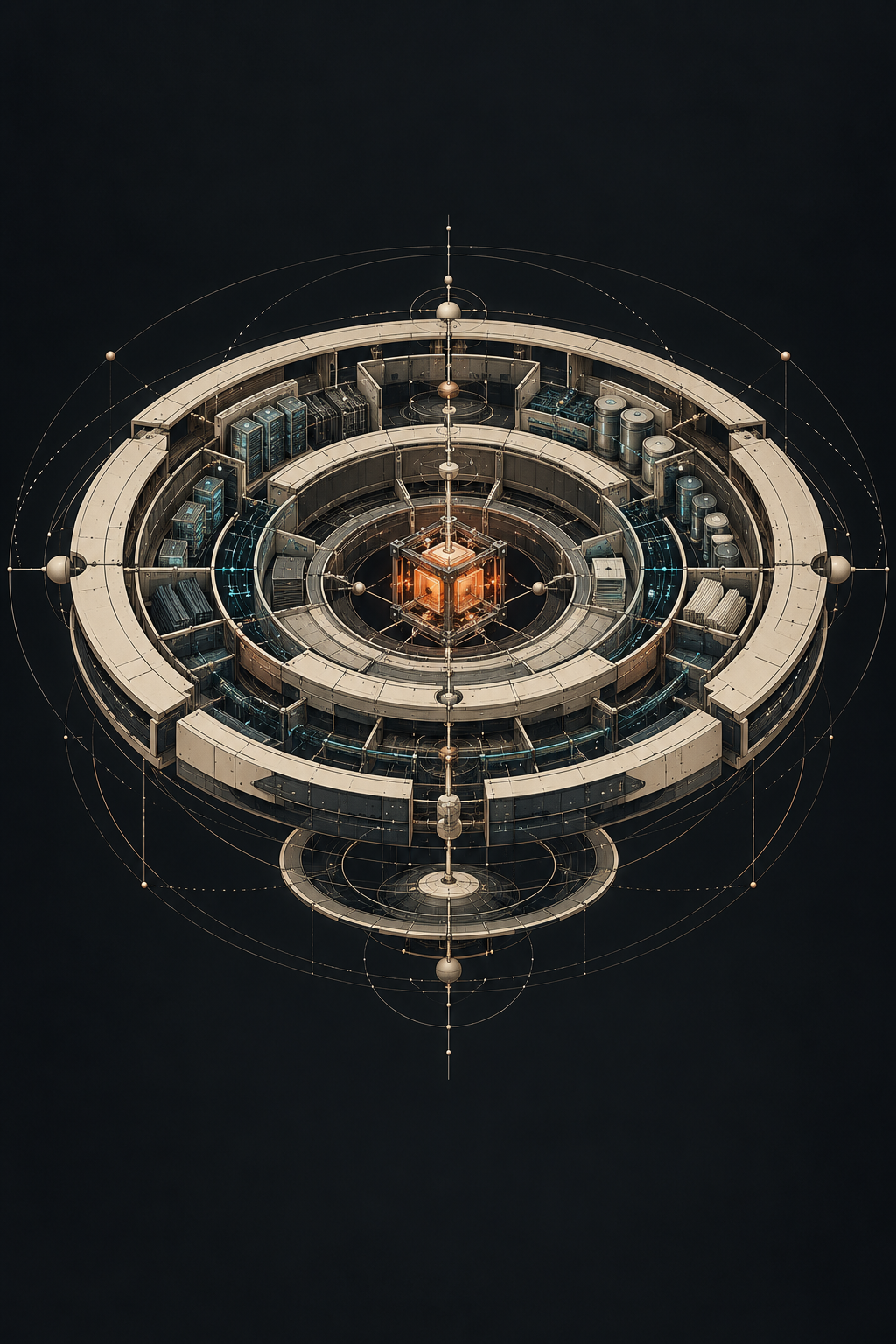
Open-source impact
Scholarly retrieval infrastructure that people use.
An MCP server that gives AI clients a direct path to current, inspectable scholarly sources. It is distributed through PyPI, Docker, Smithery, and MCP ecosystem directories.78K+ monthly PyPI downloads~180 GitHub stars26+ forks
Google Drive Upload ActionReusable CI/CD infrastructure for uploading workflow artifacts to Google Drive.108 GitHub stars · 24 forks →
Public metrics snapshot · September 2026Contributed to Open SourceFixed a LoRA fine-tuning crash on granitemoe, granitemoehybrid, and lfm2_moe — the MoE routers' integer top-k indices needed mx.stop_gradient before the backward pass, matching the pattern already used by sibling models.Added KubeRay cluster management (init/status/shutdown scripts, setup docs) to a homelab ML stack, plus earlier fixes to the Streamlit job trigger and project init scripts.Added custom Auth0 configuration support and localStorage-backed session persistence to a Streamlit Auth0 integration component.Added mcp-scholarly to the official MCP servers directory — an MCP server for searching scholarly and academic articles.Added an Express server exposing a /crawl API endpoint with Swagger docs, plus a follow-up PR documenting how to run the crawler as an API.Added Hasura GraphQL Engine to the homelab services stack, wired to the existing Postgres instance and Streamlit dashboard.
Landed upstream in MLX-LM, Model Context Protocol, BuilderIO gpt-crawler, ML Homelab.
mlx-lm
Mergedml-homelab
Mergedstreamlit-auth0
Openmodelcontextprotocol/servers
Mergedgpt-crawler
Mergedhomelab
MergedProof
View full index →Six systems that show the work, not just describe it.
subagent-fleet
local inference · model routingPersistent agent systems get expensive fast. Local-first routing turns spare Macs, workstations, and Ollama nodes into inspectable infrastructure instead of one opaque endpoint.Write-up →embenx
retrieval · memory layerAI agents need a swappable and inspectable memory substrate. embenx reduces retrieval glue code while preserving the ability to choose the right storage backend per workload.Write-up →AI Toolkit
tool interface · prompt systemsReliable AI systems need a disciplined interface layer. These tools sharpen prompts, evaluation criteria, and operator workflows before heavier agent runtime infrastructure is added.Toolkit →awesome-agentic-memory
memory research · MCPThought leadership in an emerging category requires ecosystem compression. This project translates a fragmented memory landscape into a clearer infrastructure map.Guide →antigravity-cmux-skills
Claude Code skills · agent orchestrationMulti-agent workflows often require manual context switching between sessions. antigravity-cmux-skills turns tmux into a first-class agent coordination primitive, letting builders run parallel AI sessions with structured visibility and no platform lock-in.GitHub →mcp-scholarly
MCP · research retrievalResearch-grounded agents need a reliable retrieval path to scholarly knowledge. mcp-scholarly closes the gap between LLM training data and verifiable, up-to-date academic sources.GitHub →How I ThinkAI agents need more than a foundation model — they need infrastructure for state, memory, retrieval, tool use, model routing, and evaluation, with interfaces and simulation loops layered on top as that foundation matures. My research explores that connective tissue between models and reliable action.
Layer 01
Agent Runtime
Execution layer for planners, implementers, reviewers, and agent role orchestration.Layer 02
State + Memory Layer
Durable context about tasks, users, tools, and prior outcomes over long horizons.Layer 03
Retrieval + Context Layer
Backend-agnostic search, filtering, and recall for relevant context at runtime.Layer 04
Model Routing + Local/Cloud Inference
Routing policies across local Ollama nodes, hosted models, and specialized backends.Layer 05
Observability + Evaluation
Operational visibility and behavior measurement for systems acting over time.Latest Signal
Open eval note →Local LLM serving on Apple Silicon, evaluated instead of guessed
Ran the same workload set through Ollama, vLLM Metal, and SGLang on an Apple M5 Pro, with a warmed response-quality eval suite and Gemma 4 as a second judge — then a Qwen 3.5 sweep from 0.8B to 9B.Ask about the work
Ask about projects, research direction, or what a recruiter, engineer, or researcher should know about this work.
रूपं देहि जयं देहि यशो देहि द्विषो जहि॥
May I be granted excellence, victory, worthy recognition, and freedom from hostility.